Getting ready for tax season doesn’t have to be so stressful and overwhelming. By taking a proactive approach to prepare and some help with this page, you’ll tackle this item on your to-do list confidently.
Foothill tax-related documents and information can be easily found within your online banking. If you haven't registered for online banking yet, do so here.
Please Note: If you earn less than $10 in interest, you will not get a 1099. Likewise, If you paid less than $600 in mortgage interest you will also not get a 1098.
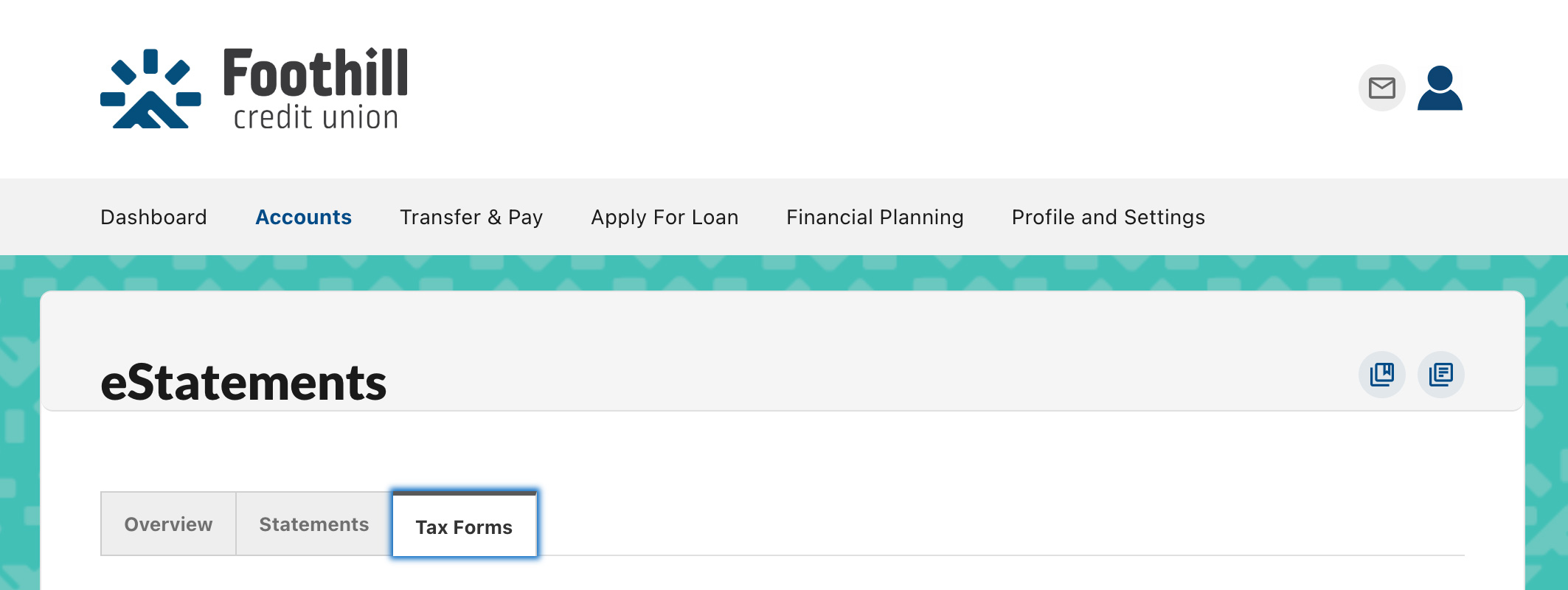
Within the eStatements widget, you can access the tax forms.
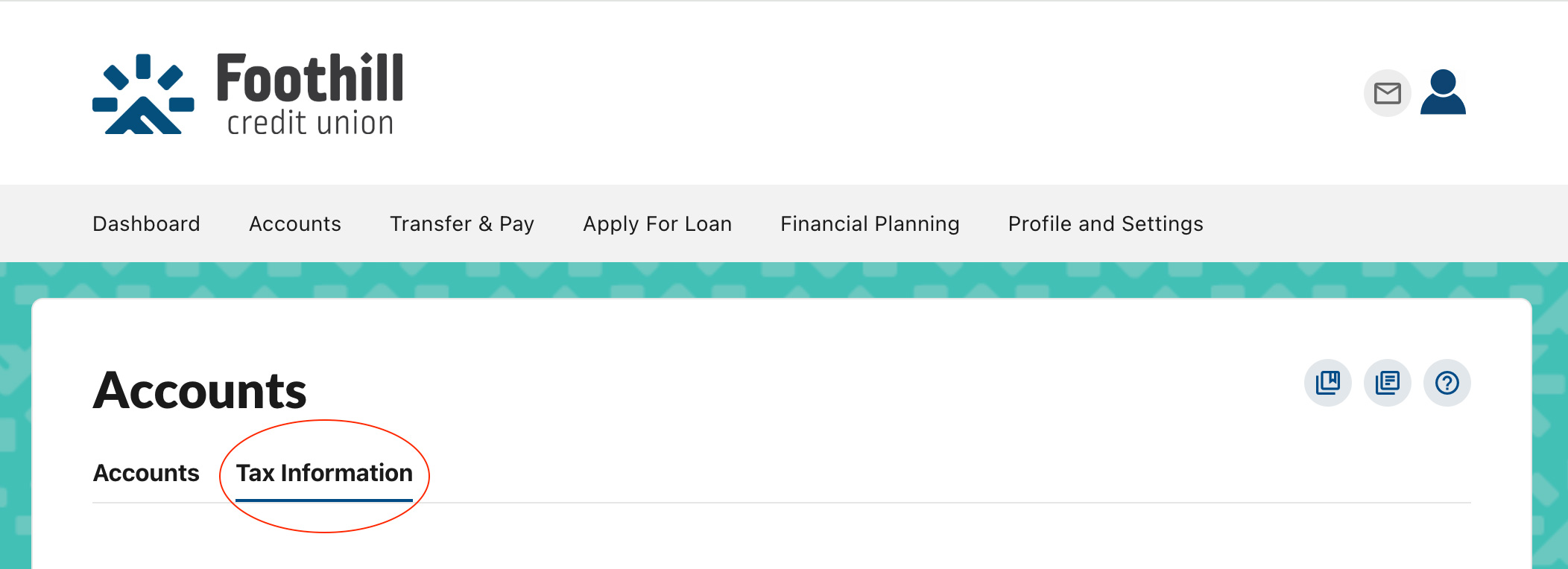
Within the Accounts widget, you can access the Tax Information tab.
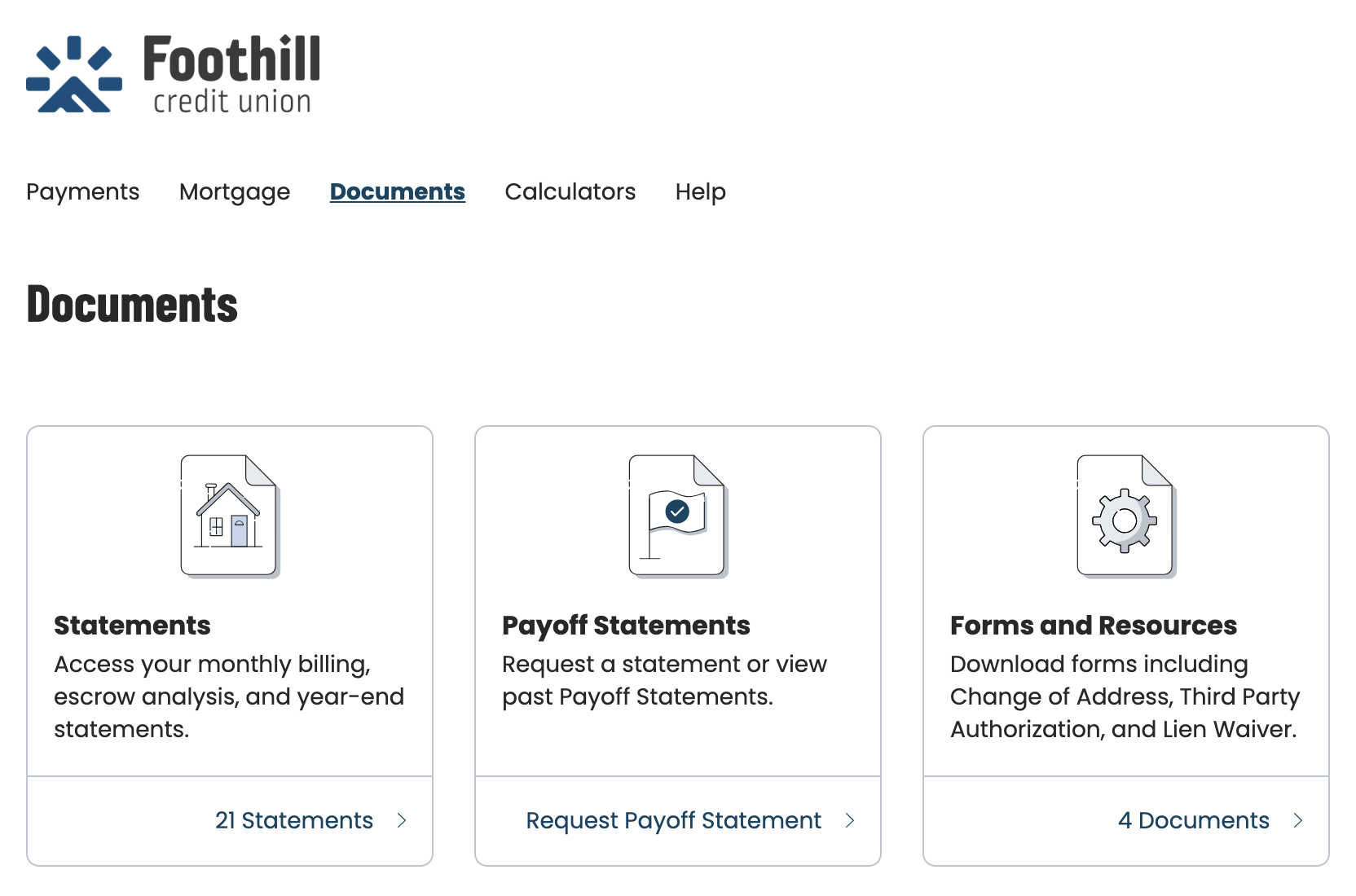
If you have a mortgage with Foothill, log-in to your online banking to retrieve your mortgage tax info.
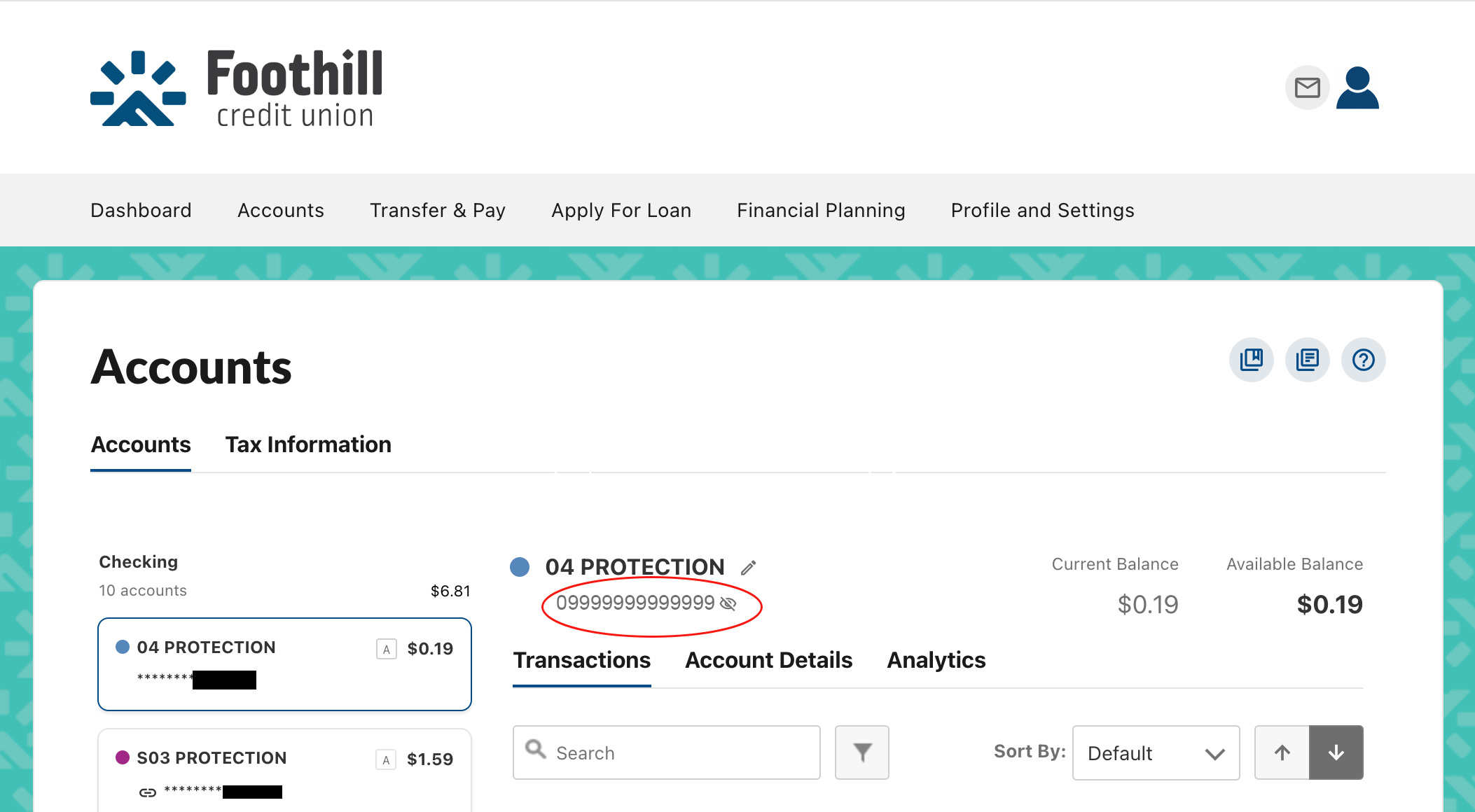
Regardless of whether you file electronically or on paper, consider having your refund check directly deposited into your Foothill savings or checking account. For this you'll need Foothill's routing number and your account number.
 Did you file already? Find out about your refund status here.
Tax scams can take many forms, with perpetrators posing as the IRS in everything from email refund schemes to phone impersonators. Be vigilant of any unexpected communication that is purportedly from the IRS especially at the start of tax season. Here are some red flags to look for:
Click here for other scams targeting tax payers (Source: IRS)
If you’re expecting a tax refund this year, that’s great news! It may be tempting to spend it all at once, but a tax refund is a great opportunity to set yourself up for a brighter financial future. Remember, the government isn’t sending you a bonus check. You worked hard for this money and it should’ve been yours from the start. Don’t treat your refund check any differently than your monthly paycheck––use it wisely!
 Start an Emergency Fund
If you don’t have an emergency fund set up yet, tax time is the perfect opportunity to start. A general rule of thumb is to set a goal of $1,000, which might seem like a lot, especially if you’re struggling just to meet the day-to-day expenses. But if you can just put a few hundred dollars from your return toward establishing one, you’ll be better off than most.
 Pay Down High-interest Debt
The next step is to work on paying off, or at least putting a good portion towards, high interest debt. These are things like credit cards, school loans, or any other outstanding debt you might have with a super high interest rate. The sooner you can get rid of these payments, the more money you’ll have available for other, and more important things!
 Build Your Savings Account
Once you’ve paid down high interest debt AND have at least a $1,000 emergency fund, it’s time to start building your savings account. This is the fun part, because you can start dreaming about all the different things you want to eventually purchase!
Some people prefer to open a separate savings account specifically for each item they are saving for, or designate various columns in the same account to keep track. Do what works best and makes the most sense to you.
 Pay Down Long-term Debt
Interest rates for mortgages and car loans are generally lower than credit card rates, so the next step is to work on paying down those longer term debts that you’ve accumulated. It can seem really overwhelming to look at your mortgage and wonder how you’ll ever decrease it to a more manageable level, but even just one extra payment a year can have a big impact, and save a lot of interest.
 Invest in the Future
When you have all the previous steps completed––or at least a good start––it’s time to use that tax refund towards investments. If you have a 401K through your employer, seriously consider adding a little bit more toward it this year, and if you don’t yet have a Traditional or Roth IRA, now might be the perfect time to open one.
Certificates of Deposit may be worth looking into if you don’t need to access your tax money right away, and are still deciding the best course of action.
Any amount you contribute towards retirement is deductible on next year’s taxes, so it’s has an even bigger and better benefit beyond helping you prepare for the future.

Understand why taxes are important, how to stay on top of your taxes, and the steps for filing so that you can avoid the stress of tax season.
Get StartedFoothill Credit Union is a full-service credit union with California branches in Arcadia, Covina, Glendora, and Upland.